Popular games



Related games











Published on: November 2026
Game technology: HTML5
Platforms: PC, Phone, Tablet
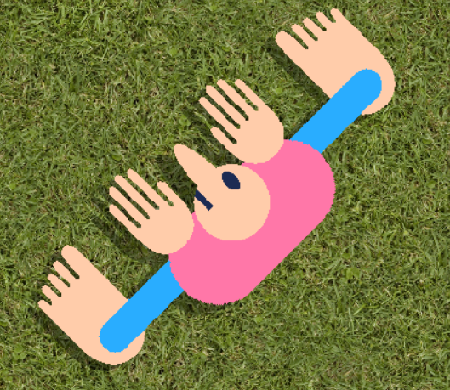
Walking through a city becomes a challenging puzzle in Walkable Cities, a humorous exploration game built around an unusual movement system. Instead of controlling a character with traditional directional keys, players must move by rotating around one foot at a time. Every step changes the character’s position and determines where the next movement can begin. The game presents a series of urban environments filled with paths, obstacles, and awkwardly designed spaces. The main objective is to navigate each area successfully while using as few steps as possible.
Exploring Cities with Unusual Movement
Walkable Cities uses a top-down perspective that allows players to observe the environment and plan their movements. The character continuously pivots around one foot until the player presses the movement button, switching to the other foot. This creates a distinctive walking pattern where even reaching a nearby location requires careful timing. Walls, narrow passages, and environmental obstacles complicate navigation. Players must consider the direction of each rotation before taking another step.
Controls and Puzzle Mechanics
The game’s control scheme is intentionally minimal. Pressing Space makes the character take a step, while R restarts the current challenge. Despite these simple controls, moving accurately requires practice.
The main gameplay features include:
· Rotating around alternating feet to move forward.
· Pressing Space to change the active foot.
· Navigating narrow paths and complicated city layouts.
· Avoiding walls and environmental obstacles.
· Planning movements to reduce unnecessary steps.
· Solving navigation puzzles in different locations.
· Restarting challenges to improve performance.
· Tracking steps and experimenting with faster routes.
Levels and Movement Challenges
Walkable Cities organizes its challenges around navigating different environments. Each area introduces arrangements of paths and obstacles that require players to adjust their walking technique. A route that appears straightforward may become difficult because the character cannot move directly in a straight line.
The step counter encourages players to complete challenges efficiently rather than simply reaching the destination. A speedrun timer also provides an additional way to measure performance. There is no traditional combat system or extensive storyline in the browser game. Progression depends on mastering the unusual walking mechanics and solving increasingly demanding navigation puzzles. Players can repeat completed challenges to find shorter routes and improve their results.
